
Male pattern baldness is one of the most common causes of hair loss in men worldwide. Medically known as Androgenetic Alopecia, it affects millions of men, often beginning as early as their late teens or early twenties. While it is a natural condition, it can significantly impact confidence and self-image if not addressed early.
What is Male Pattern Baldness?
Male pattern baldness is a genetic and hormonal condition that leads to progressive thinning of hair, primarily affecting the front and top of the scalp. It typically follows a recognizable pattern, starting with a receding hairline and thinning at the crown, eventually leading to partial or complete baldness.
The progression is usually classified using the Norwood Scale, which ranges from mild hairline recession to severe baldness.
Causes of Male Pattern Baldness
The primary cause of androgenetic alopecia is a combination of genetics and hormones, particularly a hormone called Dihydrotestosterone (DHT).
Role of DHT
DHT is derived from testosterone and plays a key role in hair loss. In men who are genetically predisposed:
- Hair follicles become sensitive to DHT
- Follicles gradually shrink (miniaturization)
- Hair becomes thinner, shorter, and weaker
- Eventually, follicles stop producing hair altogether
Other Contributing Factors
While DHT is the main culprit, other factors can accelerate hair loss:
- Family history of baldness
- Stress and lifestyle factors
- Poor nutrition
- Hormonal imbalances
- Medical conditions
Signs and Symptoms
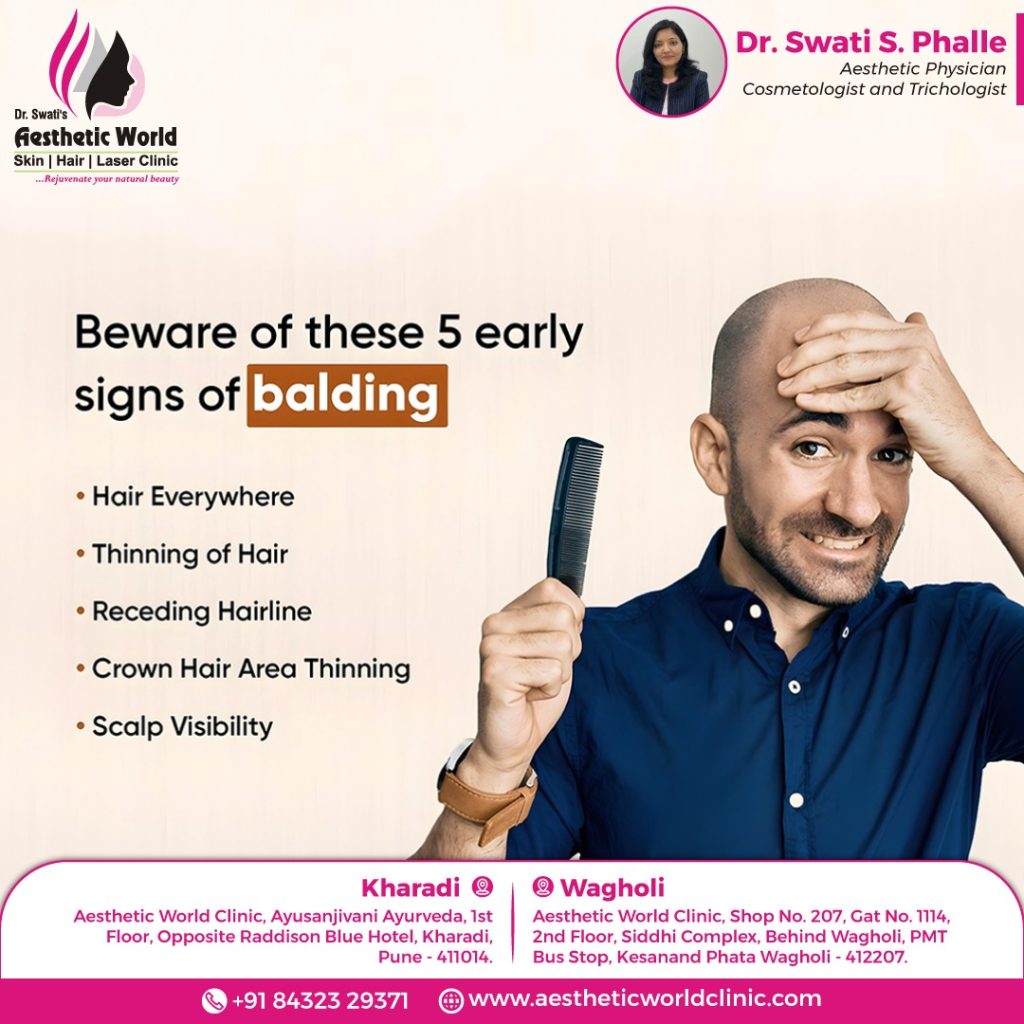
Male pattern baldness develops gradually. Common early signs include:
- Receding hairline (especially at the temples)
- Thinning at the crown
- Excessive hair fall during washing or combing
- Reduced hair volume and density
As the condition progresses, these areas may merge, leaving a horseshoe-shaped ring of hair around the sides and back of the scalp.
Stages of Hair Loss
Understanding the stages helps in early intervention:
- Stage 1–2: Minimal hairline recession
- Stage 3: Noticeable temple recession
- Stage 4: Thinning crown becomes visible
- Stage 5–6: Significant hair loss with merging bald areas
- Stage 7: Advanced baldness with minimal hair remaining
Early stages are the best time to begin treatment, as hair follicles are still active.
Treatment Options for Male Pattern Baldness
Although male pattern baldness cannot be completely reversed, it can be effectively managed and slowed down with the right treatment plan.
1. Medications
- Minoxidil: A topical solution that improves blood flow to hair follicles and promotes growth
- Finasteride: Reduces DHT levels, slowing hair loss
These treatments are most effective in early to moderate stages.
2. PRP (Platelet-Rich Plasma) Therapy
PRP is a non-surgical treatment that uses your own blood to stimulate hair growth. It:
- Strengthens existing hair follicles
- Improves hair thickness
- Reduces hair fall
It is often combined with medications for better results.
3. Hair Transplant Surgery
For advanced baldness, hair transplant is a permanent solution. Healthy hair follicles are taken from the back of the scalp and implanted in bald areas.
Modern techniques like:
- FUE (Follicular Unit Extraction)
- FUT (Follicular Unit Transplantation)
provide natural-looking results with minimal downtime.
4. Lifestyle and Nutritional Support
Healthy habits play a supportive role in managing hair loss:
- Balanced diet rich in protein, iron, and vitamins
- Stress management
- Proper scalp care
- Avoiding excessive heat and chemical treatments
Can Male Pattern Baldness Be Prevented?
Since genetics play a major role, complete prevention is not possible. However, early diagnosis and timely treatment can:
- Slow down hair loss progression
- Preserve existing hair
- Improve hair quality
Ignoring early signs often leads to more extensive hair loss, limiting treatment options later.
When Should You See a Specialist?
You should consult a hair specialist if:
- You notice sudden or excessive hair fall
- Your hairline is receding rapidly
- There is visible thinning at the crown
- Over-the-counter treatments are not working
Early professional intervention can make a significant difference in outcomes.
Final Thoughts
Male pattern baldness is a common yet manageable condition. Understanding its causes and progression allows you to take proactive steps toward treatment. With advancements in medical science—from medications to PRP and hair transplants—effective solutions are available for every stage of hair loss.
The key is early action and a personalized treatment plan tailored to your specific condition.


