
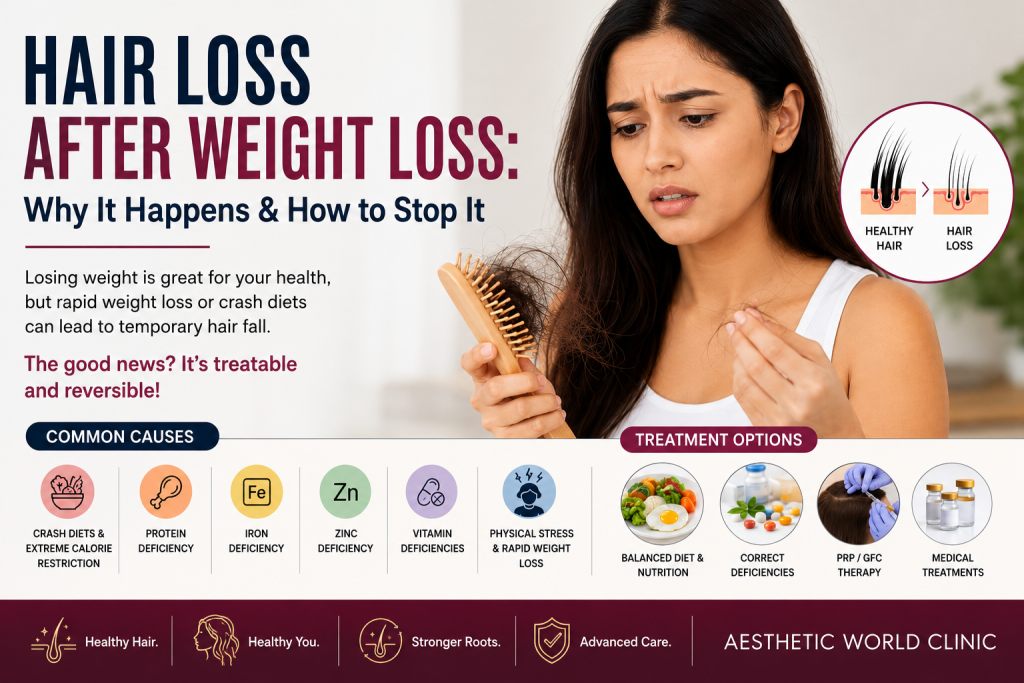
Losing weight is often considered a positive step toward better health. However, many people are surprised to notice increased hair shedding a few weeks or months after significant weight loss. Finding excessive hair on your pillow, in the shower drain, or while combing can be alarming.
The good news is that hair loss after weight loss is usually temporary and treatable. Understanding why it happens and taking appropriate steps can help restore healthy hair growth.
At Aesthetic World Clinic, we frequently see patients who experience hair thinning after dieting, bariatric surgery, intermittent fasting, or rapid weight loss programs. This article explains the causes, risk factors, and treatment options available.
Is Hair Loss After Weight Loss Normal?
Yes. Hair loss after rapid weight loss is a common phenomenon known as Telogen Effluvium.
Normally, about 85–90% of your hair follicles are actively growing, while 10–15% remain in a resting phase. When the body experiences physical stress such as rapid weight loss, illness, surgery, or nutritional deficiencies, many hair follicles enter the resting phase prematurely.
As a result, excessive shedding begins approximately 2–4 months after the triggering event.
Why Does Weight Loss Cause Hair Loss?
Weight loss itself does not directly damage hair follicles. Instead, the stress associated with rapid weight reduction affects the body’s ability to maintain normal hair growth.
Common reasons include:
1. Crash Dieting
Crash diets often involve severe calorie restriction.
Examples include:
- Extremely low-calorie diets
- Detox diets
- Juice cleanses
- Fad diets
- Excessive fasting
When calorie intake becomes too low, the body prioritizes essential organs over non-essential functions such as hair growth.
This can lead to:
- Hair thinning
- Increased shedding
- Slower hair growth
- Reduced hair density
2. Protein Deficiency
Hair is primarily composed of a protein called keratin.
When dietary protein intake becomes inadequate, the body conserves protein for vital functions, resulting in reduced hair production.
Common signs include:
- Excessive shedding
- Weak hair strands
- Reduced hair thickness
- Slow hair growth
Protein deficiency is particularly common in:
- Vegan diets
- Extreme dieting
- Post-bariatric surgery patients
3. Iron Deficiency
Iron deficiency is one of the most common nutritional causes of hair loss.
Rapid weight loss often leads to reduced iron intake, especially in women.
Symptoms may include:
- Hair fall
- Fatigue
- Weakness
- Dizziness
- Pale skin
Low ferritin levels can significantly affect hair growth cycles.
4. Zinc Deficiency
Zinc plays an important role in:
- Hair follicle health
- Tissue repair
- Cell growth
Insufficient zinc levels may result in:
- Hair thinning
- Brittle hair
- Slow regrowth
5. Vitamin Deficiencies
Several vitamins support healthy hair growth.
Deficiencies in the following nutrients can contribute to hair loss:
- Vitamin D
- Vitamin B12
- Biotin
- Folate
- Vitamin A
- Vitamin E
People following restrictive diets are particularly vulnerable to these deficiencies.
6. Rapid Weight Loss Stress
Losing a large amount of weight within a short period places considerable stress on the body.
This physiological stress can trigger Telogen Effluvium, leading to noticeable hair shedding.
The faster the weight loss, the greater the likelihood of experiencing temporary hair loss.
Hair Loss After Bariatric Surgery
Hair loss is common after weight loss surgeries such as:
- Gastric sleeve surgery
- Gastric bypass surgery
- Mini gastric bypass
Contributing factors include:
- Reduced food intake
- Protein deficiency
- Iron deficiency
- Vitamin deficiencies
- Surgical stress
Hair shedding often starts 3–6 months after surgery and may continue for several months.
Signs That Hair Loss Is Related to Weight Loss
Common symptoms include:
- Diffuse hair thinning
- Increased hair fall while washing
- Excessive shedding during combing
- Hair found on pillows
- Reduced hair volume
- Visible scalp in some areas
Unlike genetic hair loss, shedding occurs across the entire scalp rather than specific regions.
How Long Does Hair Loss Last?
In most cases, hair loss after weight loss is temporary.
Typical recovery timeline:
| Stage | Duration |
|---|---|
| Weight loss begins | Week 0 |
| Hair shedding starts | 2–4 months |
| Peak shedding | 3–6 months |
| Recovery begins | 6–9 months |
| Significant improvement | 9–12 months |
Once nutritional deficiencies are corrected, hair growth generally resumes.
How to Stop Hair Loss After Weight Loss
Increase Protein Intake
Aim for adequate daily protein intake from sources such as:
- Eggs
- Fish
- Chicken
- Greek yogurt
- Paneer
- Tofu
- Lentils
- Beans
Protein supports keratin production and healthy hair growth.
Correct Nutritional Deficiencies
Laboratory evaluation may include:
- CBC
- Ferritin
- Vitamin D
- Vitamin B12
- Zinc
- Thyroid profile
Correcting deficiencies can significantly reduce hair shedding.
Avoid Crash Diets
Healthy weight loss should be gradual.
Most experts recommend losing:
- 0.5–1 kg per week
This reduces stress on the body and minimizes hair loss risk.
Stay Hydrated
Adequate hydration supports scalp health and nutrient delivery to hair follicles.
Manage Stress
Stress management techniques include:
- Exercise
- Yoga
- Meditation
- Adequate sleep
Reducing stress may improve hair recovery.
Advanced Treatment Options
If hair loss persists despite dietary correction, professional treatment may be beneficial.
PRP Therapy
Platelet-Rich Plasma (PRP) therapy uses growth factors derived from your own blood to stimulate hair follicles.
Benefits include:
- Reduced shedding
- Improved hair density
- Enhanced hair growth
GFC Hair Treatment
Growth Factor Concentrate (GFC) therapy is an advanced regenerative treatment that delivers concentrated growth factors directly to the scalp.
Benefits:
- Improved follicle activity
- Reduced hair fall
- Better hair thickness
Mesotherapy
Mesotherapy involves injecting vitamins, minerals, and amino acids into the scalp.
This treatment helps:
- Nourish follicles
- Improve blood circulation
- Support healthy hair growth
Medical Hair Growth Solutions
Depending on the diagnosis, dermatologists may recommend:
- Topical treatments
- Oral supplements
- Prescription medications
Best Foods for Hair Regrowth
Include these hair-friendly foods:
- Eggs
- Salmon
- Nuts
- Seeds
- Spinach
- Sweet potatoes
- Berries
- Avocados
- Lentils
- Dairy products
These foods provide protein, iron, zinc, and vitamins essential for hair growth.
When Should You See a Dermatologist?
Consult a dermatologist if:
- Hair shedding continues beyond 6 months
- Hair loss becomes severe
- Bald patches develop
- Scalp itching occurs
- Hair density significantly decreases
Early diagnosis improves treatment outcomes.
Conclusion
Hair loss after weight loss is a common and often temporary condition. Rapid dieting, nutritional deficiencies, stress, and significant calorie restriction can trigger excessive hair shedding. Fortunately, most cases improve once the underlying cause is identified and corrected.
A balanced diet, proper supplementation, stress management, and advanced treatments such as PRP or GFC therapy can help restore healthy hair growth. If hair shedding persists, seeking professional evaluation can ensure appropriate treatment and faster recovery.
FAQs
Does losing weight always cause hair loss?
No. Hair loss is more common when weight loss is rapid or associated with nutritional deficiencies.
How much hair loss is normal after weight loss?
Temporary increased shedding for a few months may occur, especially after significant weight reduction.
Can hair grow back after weight loss?
Yes. Most cases of weight-loss-related hair loss are reversible once deficiencies are corrected.
Which vitamin deficiency causes hair loss after dieting?
Vitamin D, Vitamin B12, iron, zinc, and folate deficiencies are common contributors.
Is PRP effective for hair loss after weight loss?
PRP can help stimulate hair growth and improve recovery, especially when combined with nutritional correction.


