
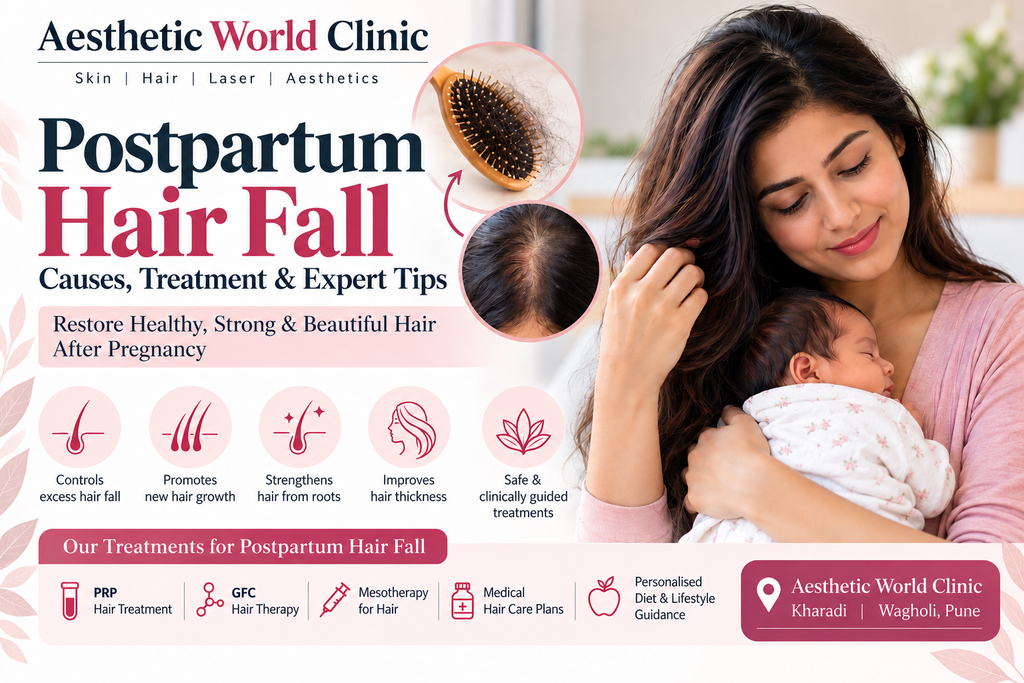
Your hair is coming out in handfuls every time you wash it, and every drain in the house is clogged. If you searched for postpartum hair fall treatment from Pune, you’re probably wondering if this much shedding is normal or if something’s wrong.
You’ve finished delivery, you’re sleep-deprived, feeding on a strange schedule, and now your hair is falling too. Let’s break down what’s normal, what isn’t, and what you can safely do to protect your hair and scalp in the months after childbirth.
What Actually Causes Postpartum Hair Fall?
During pregnancy, high oestrogen levels keep hair in the “growth” phase for longer, which is why many women notice thicker, shinier hair. After delivery, those hormone levels drop. The hair that had been “on hold” all sheds together, leading to sudden hair fall after delivery.
This process is called telogen effluvium. It usually starts around 8–12 weeks after childbirth, often just when you think you’ve settled into a routine. The shedding can look dramatic, but in many cases the hair follicles themselves remain healthy.
Other factors make it worse: iron or vitamin D deficiency, low protein intake, thyroid changes, stress, and lack of sleep. In Pune, many new mothers also fast for religious reasons or skip meals while caring for the baby, which quietly worsens the shedding.
Postpartum Hair Loss: How Long Does It Last?
If your blood tests are normal and there’s no underlying scalp issue, the intense shedding phase often lasts a few months. That’s why so many women ask “postpartum hair loss how long” on search — it feels never-ending when you’re in it.
The good news: for most women, shedding slows down gradually, and baby hairs start showing along the hairline and partition in the following months. The less-good part is that the full cycle of fall and regrowth can stretch across many months, not weeks, so patience is part of the treatment plan.
If you still notice heavy clumps coming out after several months, or if you see visible thinning patches rather than general shedding, it’s time to have your scalp and blood work checked rather than waiting it out.
Normal Shedding Vs Concerning Hair Loss
Diffuse shedding all over the scalp with no obvious bald patches is usually part of the natural postpartum reset. That said, if you can see your scalp clearly through the hair on the crown, or if your parting is widening, the pattern may be shifting from temporary shedding towards female pattern hair loss, which needs earlier medical attention.
Dermatologists often differentiate these with a clinical exam and, when required, a trichoscopy (scalp magnification) before advising any postpartum hair regrowth treatment.
Safe Home Care For Postpartum Hair Fall
You don’t have control over hormones, but you do have control over how gently you treat your hair and how well you support your body while it recovers.
- Switch to gentle washing: Use a mild shampoo, wash 2–3 times a week, and avoid aggressively rubbing the scalp with a towel. Pat dry instead.
- Loosen your hairstyle: Tight ponytails, top knots and heavily pinned buns strain fragile roots. Opt for loose braids or low ponytails, especially in the Pune heat.
- Prioritise nutrition: Aim for regular meals with good protein sources, leafy vegetables and healthy fats. If your doctor has advised iron, calcium or vitamin supplements, don’t skip them.
- Be kind to your scalp: Avoid frequent colouring, straightening and high-heat styling in the first few months after delivery.
Simple changes like these don’t stop hormonal shedding overnight, but they protect the new growth and reduce breakage, which makes your hair look fuller while it recrows.
When Do You Need Professional Help?
Medical help is sensible if hair fall affects your confidence, your ponytail feels noticeably thinner, or you see scalp through the frontal area. A trichology-focused clinic can examine your scalp, run targeted blood tests and design a postpartum hair fall treatment plan tailored to your recovery stage.
If you want to understand non-surgical options for thinning and balding beyond the postpartum phase, the clinic’s detailed guide on hair fall treatment in Pune explains how different approaches are chosen.
Medical Treatment Options After Delivery
The right plan depends on when you delivered, whether you’re breastfeeding, your blood reports, and how severe the shedding is. Treatment is rarely about one magic solution; it’s usually a mix of internal correction and topical or procedural support.
Topical serums prescribed by a dermatologist, gentle hair supplements (if your gynaecologist agrees) and treatment of issues like dandruff or seborrhoeic dermatitis can all support healthier roots and better regrowth.
Some women benefit from in-clinic therapies under the broader umbrella of hair treatments, but timing matters a lot in the postpartum phase, especially if you’re still breastfeeding.
PRP And GFC For Postpartum Hair Fall
Many new mothers hear about “PRP after delivery hair fall” from friends or social media and assume it’s the first step. Platelet-rich plasma and growth factor concentrate treatments are designed to stimulate hair follicles with growth factors from your own blood, but they’re not started blindly.
In practice, an experienced doctor first confirms that the active shedding phase is settling, screens for deficiencies, and then discusses if and when office procedures like PRP or GFC make sense for you. For a deeper understanding of how both compare in non-postpartum hair loss, you can read the clinic’s guide to PRP vs GFC for hair loss.
Choosing The Right Clinic In Pune
Postpartum shedding is common, but you don’t have to guess your way through it. The clinic you choose in Pune should be experienced with female hair loss, comfortable coordinating with your gynaecologist if needed, and honest about what is and isn’t realistic after childbirth.
Practical signs of a good clinic include a detailed scalp examination, questions about your pregnancy history, delivery details and feeding pattern, and a doctor who explains each step instead of pushing packages. Photo documentation and follow-up checks are also useful because they show whether the treatment plan is truly helping.
To see the broader range of skin and aesthetic support that can complement your postpartum journey, you can explore their main aesthetic treatments section.
Supporting Your Skin And Confidence After Delivery
Hair is only one part of how you feel in your body after childbirth. Many women also notice dull, tired skin, pigmentation patches and uneven tone, especially with sleep deprivation and sun exposure.
If your concern extends to skin health as well, the clinic’s overview on skin treatment for healthy, clear and glowing skin explains how different non-surgical options can be staged so they don’t interfere with your recovery and baby’s routine.
Postpartum Hair Regrowth: Setting Realistic Expectations
The question “postpartum hair regrowth treatment that works” usually hides another fear: “Will my hair ever look like it used to?” For many women, the answer is that density improves, but it may not look exactly the same as pre-pregnancy hair, especially if a genetic tendency to thinning was already present.
Think of treatment like guiding your hair back to its best possible version, not chasing an unrealistic picture from old photographs. Addressing nutrition, sleep where possible, hormonal balance and scalp health together tends to give more reliable results than chasing only procedures.
Regular follow-up helps. As new growth comes in, the plan can be adjusted: sometimes you’ll need to step down to maintenance, sometimes you’ll add a new modality if the shedding shifts pattern. Honest communication with your dermatologist matters more than any one product.
Conclusion
Postpartum shedding is jarring, but in most women it’s a temporary phase that can be managed with the right mix of gentle care, medical evaluation and realistic expectations. A structured postpartum hair fall treatment plan will respect your recovery, your baby’s needs and your long-term hair health.
If hair fall after pregnancy is worrying you in Pune, discussing your concerns with a doctor at Aesthetic world clinic can help you separate normal shedding from treatable hair loss and choose the safest next steps for you.
Frequently Asked Questions
Q1. How long does postpartum hair fall usually last?
Ans: Most women notice shedding starting a couple of months after childbirth, with the worst phase spread over several weeks. Visible improvement takes longer, because new hair needs time to grow. If heavy fall continues for many months or your scalp starts to show through the hair, get a medical opinion.
Q2. Is hair fall after delivery normal if clumps come out in the shower?
Ans: Seeing clumps in the shower can be frightening, but it’s very common in the postpartum phase. What matters more than the sight of hair on the bathroom floor is whether your overall volume and hairline are steadily thinning. If they are, consult a dermatologist instead of assuming it’s just “normal” shedding.
Q3. What is the safest postpartum hair fall treatment while breastfeeding?
Ans: Safety during breastfeeding comes first, so doctors usually start with nutrition correction, gentle topical care and treatment of any scalp issues. More intensive options are introduced only after checking with your gynaecologist and explaining pros and cons. Never start medicines or procedures based only on social media recommendations.
Q4. Can PRP after delivery hair fall really help regrowth?
Ans: PRP can support regrowth by delivering your own growth factors around the hair roots, but it’s not a standalone cure. It works best once active shedding has settled, nutrient deficiencies are addressed and the pattern of hair loss is clearly understood. Your doctor will advise if the timing and medical context are right.
Q5. Do I need different treatment if postpartum hair loss lasts more than a year?
Ans: If shedding or thinning goes on for that long, your doctor will recheck for issues like thyroid imbalance, iron deficiency or evolving female pattern hair loss. The plan may shift from short-term support to a longer maintenance strategy, which can include topical medications and clinic-based therapies where appropriate.
Q6. Where can I get help for postpartum hair fall in Pune?
Ans: Start with a dermatologist or trichology-focused clinic that regularly manages female hair loss and post-pregnancy concerns. Look for a place that takes a detailed history of your delivery, feeding pattern and medicines, rather than simply selling packages. An in-person evaluation is still the most reliable way to get a personalised plan.


